The most economical and efficient way to restore your property
The seed muvuca is a mixture of seeds with different life
cycles and functions, strategically formulated for the
ecological restoration of degraded areas.
In general terms, the word muvuca became popularized
as a planting method. However, the muvuca is actually
a part of the process associated with the direct seeding
technique.

The advantages of the
seed muvuca:
Economically
more affordable
direct seeding with muvuca of seeds is one of the most viable solutions for ecological restoration that we know today, with lower transportation, implementation, and management costs compared to other known techniques.
Ecologically
more efficient
Planting through seed muvuca presents a higher germination
potential and a lower plant mortality rate, as the plants grow
already adapted to the soil and thus become more resilient.
Socially
more equitable
it is in social terms that muvuca reveals its greatest value: to make muvuca you need seeds, and to have seeds they must be collected. That’s where the magic happens!
There is a science behind the diversity
and the quantity of seeds
chosen in a muvuca,
that has been improving over the years, based on experiences and research from organizations
such as the Xingu Seeds Network and other seed networks in Brazil.
The plant species included in the muvuca are separated according to their layer and life cycle
to simulate the natural succession process: first, pioneer species emerge, which live up to one year
and play the role of green fertilization, preventing grass spread, enriching and strengthening the soil.
Then, the pioneer plants die and leave the space prepared for secondary species,
whose life cycle extends up to 20 years. Only then do we have late species (20 to 100 years)
and climax species (over 100 years), which will form the “forest of the future”.
Why is muvuca one of the solutions
to the socio-environmental problems
we face at a global level?
At the environmental level, ecological restoration using seed muvuca is very interesting not only for its
efficiency – there is a considerable density and diversity of plants that, when germinating directly in the
sown soil, grow with greater strength and resilience – but also for its ability to act in harmony with Nature.
This is because muvuca simulates what nature itself does,
but in an accelerated way.
While a natural regeneration process can take around 200 to 300 years to occur,
muvuca brings together, in a strategically designed planting, seeds with biological functions and life cycles
that are both distinct and complementary, enabling a degraded area of small, medium, or large scale
to re-establish itself.
From a social perspective, ecological restoration with muvuca also provides a
source of income generation with the standing forest for local communities through seed collection and
commercialization, valuing diversity, traditional knowledge, and permanence in the land and territory.
In addition, the socioeconomic chain that emerges from seed collection also fosters training,
capacity-building, and knowledge exchange among a wide diversity of actors linked to this chain.

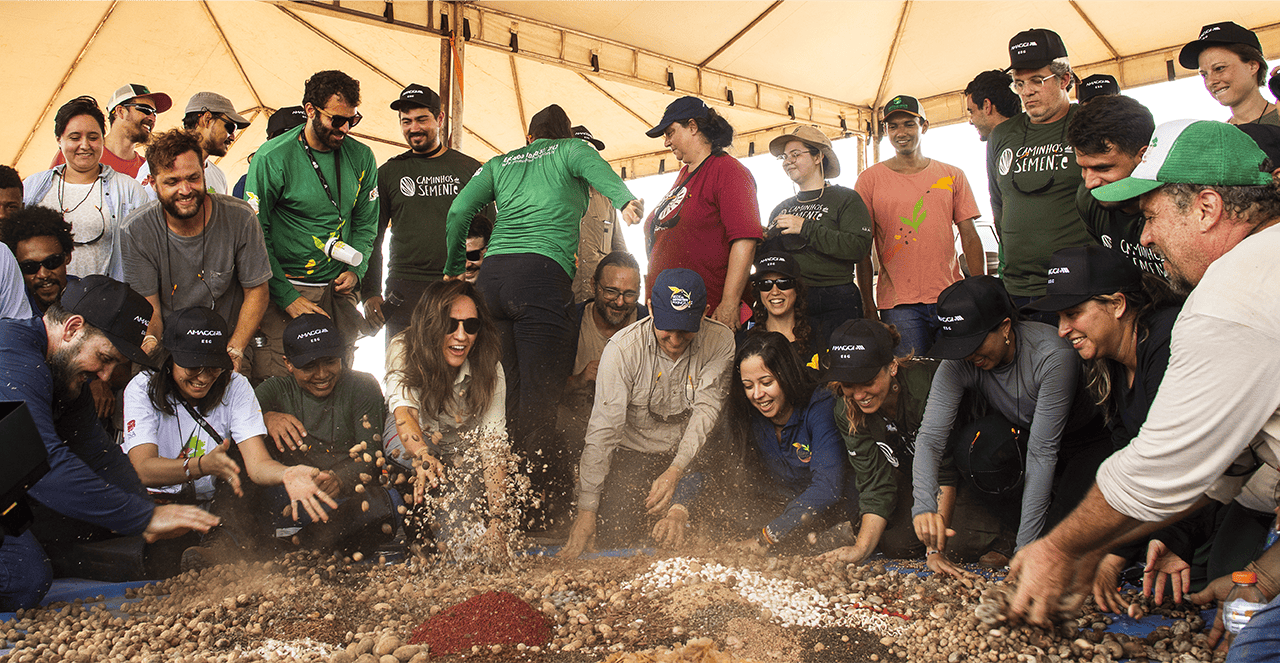
Muvuca seed planting during the 4th Ecological Restoration Expedition of the Xingu Seed Network.
PHOTO: Bianca Moreno/ISA and ARSX
How does muvuca planting work?
Direct seeding with seed muvuca can be adapted according to the context of your planting.
Here we have selected some of the main questions from those planting their muvuca for the first time!
How many seeds are there?
In general, we use between 40 and 80 species in the composition of a seed muvuca, but this number may vary according to the context and the objective of each restoration project, taking into account factors such as phytophysiognomy (type of vegetation to be restored), as well as the size and condition of the area.
What are the ways in which
a seed muvuca can be sown?
Direct seeding with seed muvuca can be adapted according to the context of your planting.
It can be done either manually, by broadcasting — in pits, rows, or over the entire area — or in a mechanized way (full area), using tractors and other agricultural implements such as a Vicon spreader or lime distributor. In this latter case, farm machinery is used to sow native seeds with the aim of restoring native vegetation.
And what about care during growth?
After sowing the seeds, it is very important to monitor their establishment. Therefore, we plan
the monitoring of plantings to assess the coverage of native and exotic species, the density
of plants per square meter, as well as to identify which species are dominating or whether
there are gaps that need to be replanted, enriched, or even redone.
Initial monitoring usually takes place two months after planting, followed by another at the end of the
first semester. After that, monitoring becomes annual until the planting reaches two to
three years of establishment.
Throughout this process, maintenance actions are necessary to ensure the success of vegetation
recovery, such as weeding, mowing, or even the occasional use of selective herbicides for grasses.

The journey of
seeds in the Network
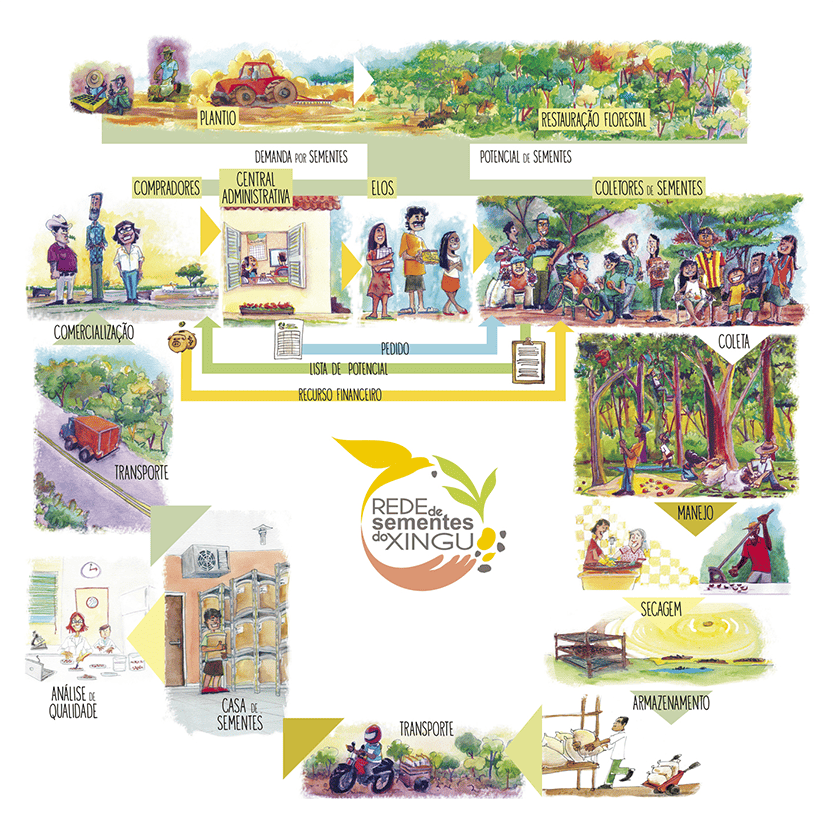
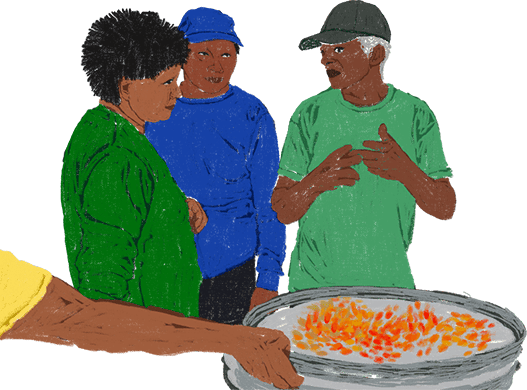
At the Xingu Seed Network, the work cycle is annual and carried out by many hands: collectors, technicians, as well as researchers, funders, landowners, and entrepreneurs meet at different points along the ecological restoration chain using muvuca of seeds.
Check below part of our workflow diagram.
1. Organize seed collection
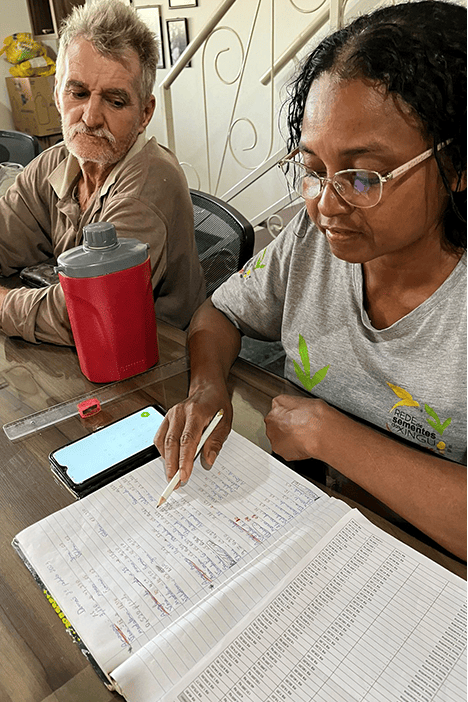
Every year, the first step of our work is to determine how many seeds can be collected in the coming year.
For this reason, we begin with the more than 700 seed collectors of the Network organizing themselves to communicate to the Technical Team the year’s “Collection Potential.”
At the same time, in our offices, the Commercial team reaches out to potential clients to estimate market demand for the same period.
We then bring together these two pieces of information — collection capacity and market demand — to generate the annual Seed Order for the Seed Collector Groups.
2. Collect the seeds
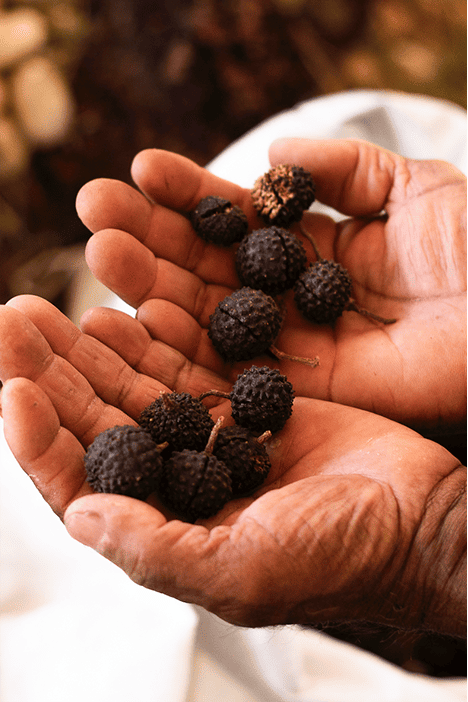
With the Seed Order organized, the 24 Seed Collector Groups prepare to collect the requested seeds.
As Nature is cyclical, each month different species produce seeds.
In the Xingu Seed Network, we only collect seeds that have already been purchased, ensuring that all collection generates income for the collectors.
For this reason, it is very important to place your order early in the year!

3. Store the seeds
Once collected, our seeds are stored in one of the three Seed Houses of the Network, located in the municipalities of Porto Alegre do Norte/MT, Canarana/MT, and Nova Xavantina/MT.
Each Seed House has a controlled environment: dry, cool, and dark.
Storage follows specific protocols: the seeds are weighed and checked — including type, processing, and quality — and then stored in dispensers, which facilitate daily organization.
4. Analyze seed quality and performance
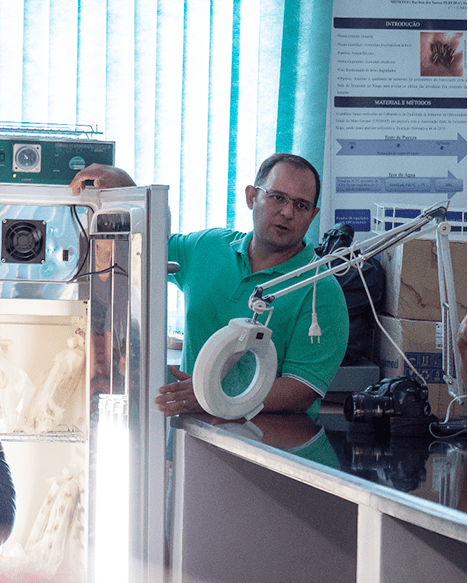
It is also in the Seed Houses that we separate seed lots for analysis at the UNEMAT Seed Laboratory, located on the Nova Xavantina campus.
“Our role is to evaluate the physiological and physical quality of some of the Network’s seeds. We analyze purity and moisture content and conduct germination and emergence tests in sand beds,” explains Rodrigo de Goés, who for many years coordinated the UNEMAT Seed Laboratory.

It is possible to sow seed muvuca using the same agricultural machinery used for other conventional farming plantings.
PHOTO: Bianca Moreno/ISA and ARSX
Seed collection, Well Living
and staying on the land
Behind muvuca, there is an entire chain of communities and territories that benefit from seed collection — an initiative that generates income, promotes health, and raises awareness among communities.
In addition to being an economic activity that goes hand in hand with keeping the forest standing, directly contributing to the quality of life of many women, families, and communities, seed collection also inspires a series of beautiful experiences for those who know how to see them. This is because seeds create connections both for those who plant and for those who collect!
Those who collect seeds walk attentively through trees, flowers, and animals. This generates both physical and emotional well-being. Seed collection is also an exercise in Environmental Education, capable of reviving cultures of protection and care for territories, reestablishing practices such as singing, observation, and walking through the land.
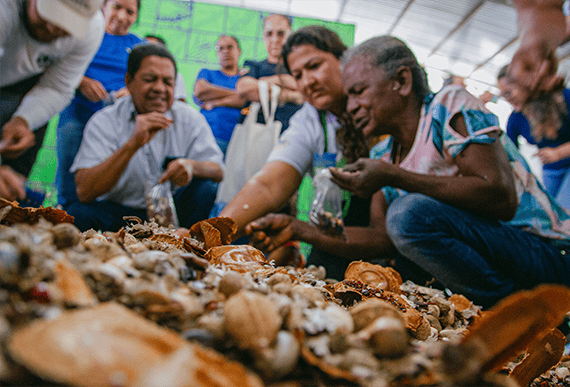
“Collecting seeds is an activity that relaxes me and teaches me new ways of caring for Nature. I didn’t used to think about preserving an area, and today I don’t want to cut down a tree. When I go into the forest to collect, I take a long time to come back home because I enjoy it so much.”
– Dalvina da Conceição,
collector from PA Manah, in Canabrava
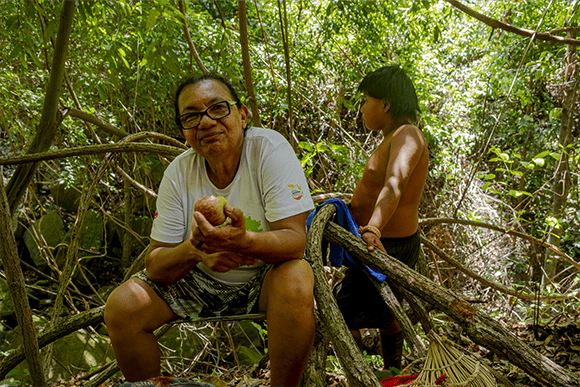
“For me, the greatest importance of collecting seeds is knowing that one day they will be planted somewhere. I’m proud to do such beautiful work — collecting seeds, knowing they are doing something very good for the planet. What we do with love and care is never in vain.”
– Cleusa Nunes de Paula, collector in the
Network since 2010 and Link of the Novo Paraíso group


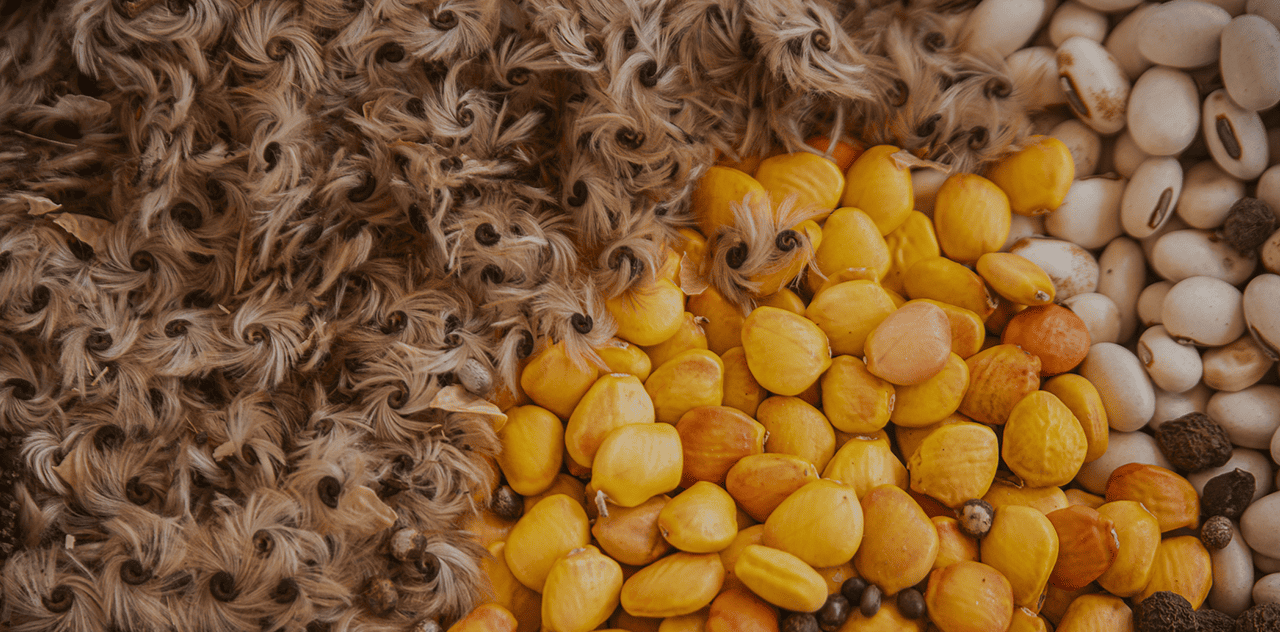
native seeds within the Xingu Seed Network: