Who is behind
seed collection
in the Xingu Seed Network?
Understand who they are, where they are, and how
they are organized — the seed collectors
of the Xingu Seed Network

24 Seed Collector Groups
At the Xingu Seed Network, seed collection is carried out by 24 Seed Collector Groups, formed based on affinities, territorial location, forms of organization, profiles, and motivations of each collector.
Today, we are more than 700 seed collectors from Indigenous communities, family farming, and urban centers.
Each of the 24 Seed Collector Groups we bring together has its own history, governance, and very particular way of collecting seeds.
The diversity among the Seed Collector Groups shows that the muvuca of seeds is capable of bringing together many different people!
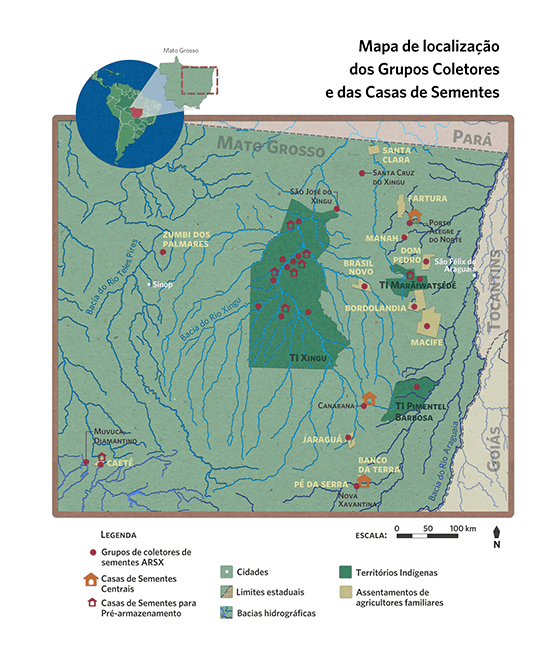
The map shows the territories where the Network operates. However, it is worth noting that we are a very dynamic initiative, and these points are frequently updated.
SOURCE: “Sowing Restoration”, by ARSX
18 municipalities in
Mato Grosso
Among the 24 Seed Collector Groups that make up our Network, we have: 12 Indigenous groups (67.85%), 10 family farming groups (25.66%), and two mixed groups (6.49%), which bring together both family farmers and urban extractivists.
These groups are distributed across 18 municipalities in Mato Grosso, namely: Nova Xavantina, Água Boa, Canarana, Querência, Marcelândia, Gaúcha do Norte, Bom Jesus do Araguaia, Serra Nova Dourada, Canabrava do Norte, Porto Alegre do Norte, Confresa, São Félix do Araguaia, Santa Cruz do Xingu, São José do Xingu, Feliz Natal, Diamantino, Poxoréu, and Alto Boa Vista.
These municipalities include 15 rural settlements and more than 30 villages located in three Indigenous Lands: TI Xingu, TI Marãiwatsédé, and TI Pimentel Barbosa.
Our work takes place in the Araguaia, Xingu, and Teles Pires river basins. Together, these three basins cover 319 thousand square kilometers — an area larger than the Brazilian state of Rio Grande do Sul.

Vera, an urban extractivist from the Nova Xavantina Seed Collector Group, is one of the women who collect the most seeds per year in the Xingu Seed Network.
PHOTO: Bianca Moreno/ISA and ARSX
+76% of the workforce
are women
They are the majority in the Network!
The strong presence of women in our work shows that the muvuca of seeds not only fosters women’s financial autonomy through the income generated by seed collection, but also highlights women’s leadership within the ecological restoration chain in Brazil.
In addition to being the majority among collectors, women also stand out in the leadership of Seed Collector Groups: 16 of the 25 groups are organized by them.
It is also worth noting that the benefits of seeds go beyond income generation: seeds bring a sense of purpose, create bonds of friendship among collectors, and energize their daily lives, reflecting in mental health and new life perspectives.
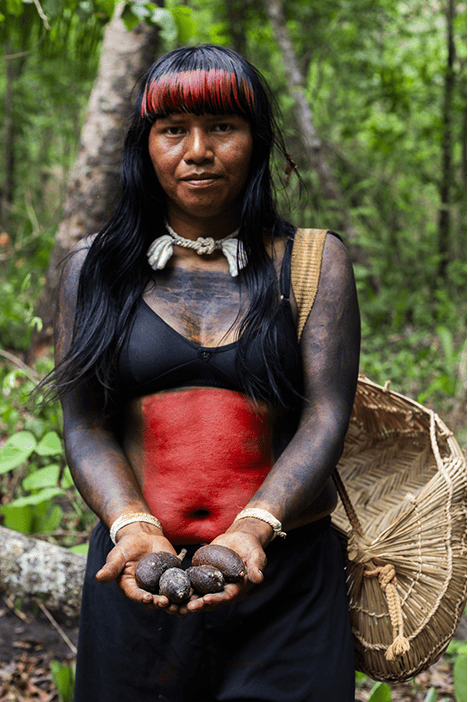
The Xavante Seed Collector Group from Ripá Village, in the Pimentel Barbosa Indigenous Territory, is entirely made up of women.
PHOTO: Bianca Moreno/ISA and ARSX
Seed collection among
Indigenous communities
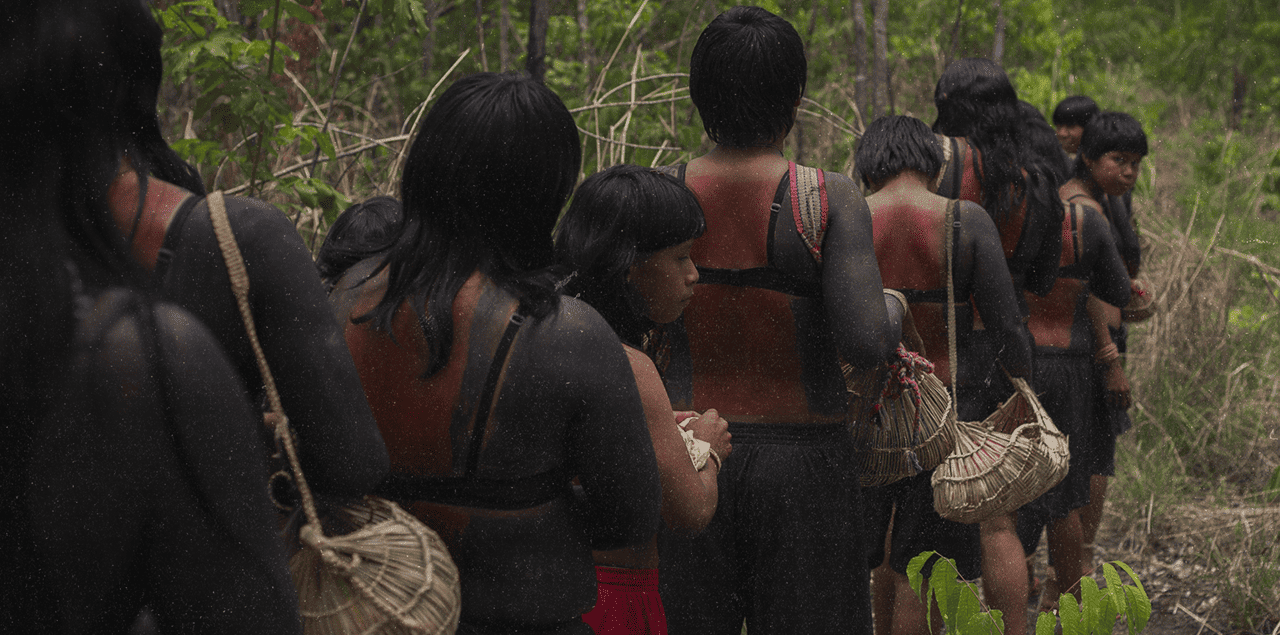
Indigenous seed collector groups include six ethnic groups: Waura, Matipu, Ikpeng, Kawaiwete, and Yudja — from the Xingu Indigenous Territory — and the Xavante people from the Pimentel Barbosa and Marãiwatsédé Indigenous Territories.
In seed collection, Indigenous communities stand out for their strong sense of collectivity, which is as powerful as it is inspiring. In many villages, the moment of collection is also a time to be together, sing, and walk through the territory, observing and protecting it.
Sometimes, there is not a strong interest in collecting large quantities of seeds, and processing is usually done by hand, which results in very clean and carefully prepared seeds. In addition, seed collection is a predominantly female activity among Indigenous communities.
DOWNLOAD THE EBOOK FOR FREE:

Nina, Luciele, and Délia are family farming seed collectors from the Manah Group in Canabrava do Norte/MT.
PHOTO: Lia R Domingues/ARSX
Seed collection in family
farming and among urban extractivists
Seed collectors from family farming and urban groups, in turn, stand out for their creativity and productivity in collection: these groups are often able to collect large volumes of seeds and develop very creative solutions for seed processing, such as the baru breaker and various techniques for opening jatobá, for example.
In the Xingu Seed Network, most family farming collectors live in Settlement Projects (PA).
In total, we work in 15 PAs, namely: PA Banco da Terra, PA Voadeira, PA Dom Pedro, PA Manah, PA Canabrava, PDS Bordolândia, PA Fartura, PA Independente I and II, PA Caeté, PA Macife, PA Jaraguá, PA Bojuí, Comunidade Taboca, and PA Paraíso do Leste.
Links and Women
the bridge between the collector,
the group, and the technical team
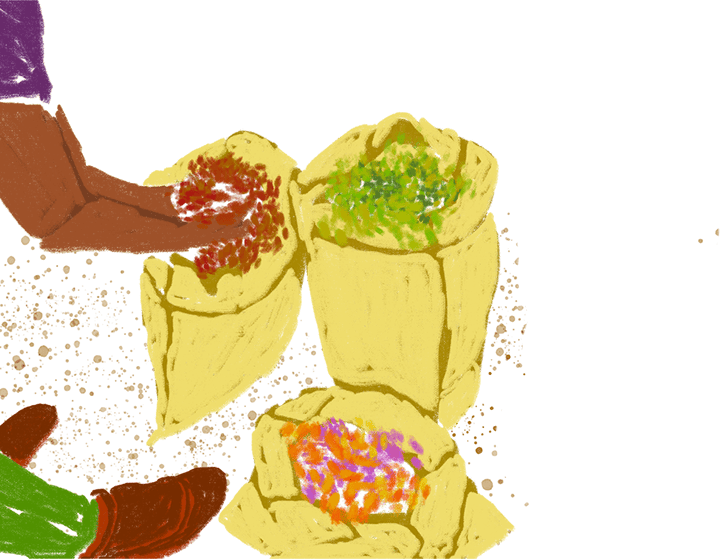
Within the governance system of the Xingu Seed Network, the “Link” is the person responsible for the cohesion of the Seed Collector Groups and for connecting seed collection to the Administrative Center
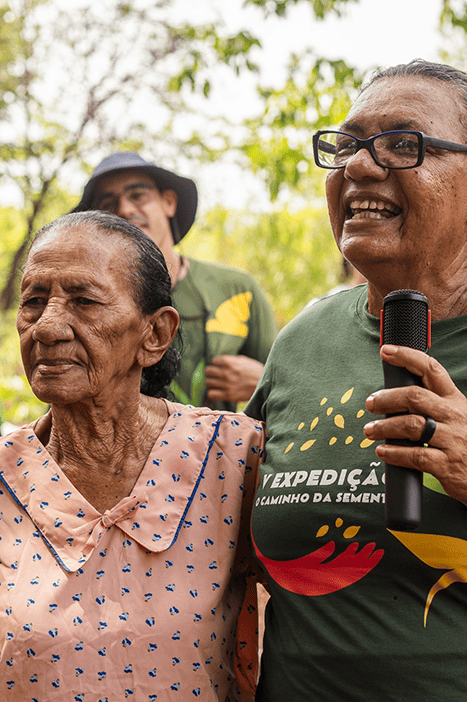
Cleusa Nunes de Paula is one of the longest-standing “Elas” in the Network: after being a leader in the Macife Group, Cleusa now leads the Seed Collector Group of Novo Paraíso Village, which brings together 20 Xavante women. In the photo, Cleusa is with her mother, Dona Alcina, a 95-year-old master of medicinal roots.
PHOTO: Bianca Moreno/RSX
In the Xingu Seed Network, we have a fundamental role: the “Link” or “She” of each Seed Collector Group.
The “Link” or “She” is the person responsible for representing a Seed Collector Group and ensuring its proper functioning.
Some of their roles include: holding evaluation and planning meetings, recording and sharing the Group’s experiences, managing stock, weighing the seeds delivered by each collector, controlling seed quality, and ensuring the delivery of the final order.
To do so, Links and Elas often participate in exchanges, courses, training sessions, and meetings organized by the Network and partner institutions. Afterwards, it is their responsibility to share news, events, and decisions from these spaces with their Seed Collector Group, contributing to the dissemination of information and knowledge within the Network.
In addition, each Link or Ela receives an amount equivalent to 5% of all seed sales made by the Network during the year, helping to cover the time and energy dedicated to fulfilling their responsibilities.
Something beautiful to observe is the growth experienced by many people who take on this leadership role. The constant exchange of knowledge and contact with diversity encourage the blossoming of these figures, who are so important to our governance! Thus, we say that the process of training collectors, links, and groups is ongoing and participatory.
How do new
people and Seed Collector Groups join?
Today, to become a collector in the Xingu Seed Network
there are two possibilities:
join an existing Seed Collector Group
propose the creation of a new Group
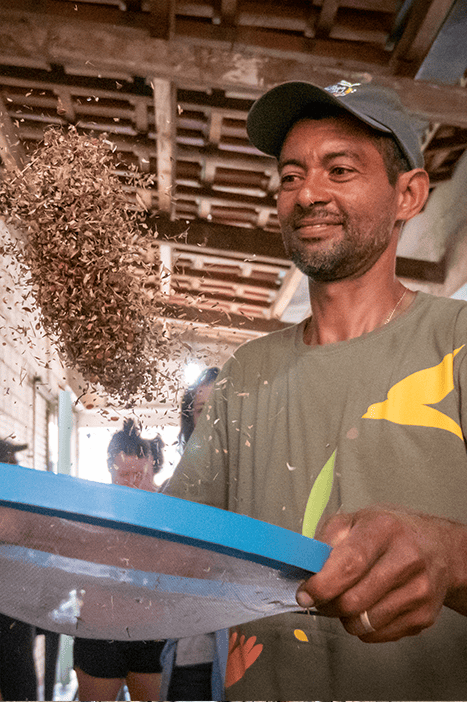
To become a collector
in an existing Group
In this case, an existing Seed Collector Group invites the new collector to a meeting to explain how the Xingu Seed Network works.
From that point on, the first year of collection activity for the interested person begins, still on an experimental basis. During this period, the new collector will be supported by other collectors throughout both the collection and seed processing stages.
It is also common for this person to receive a smaller list of orders than the rest of the Group until, in the following year, they are formally registered as a Network collector.
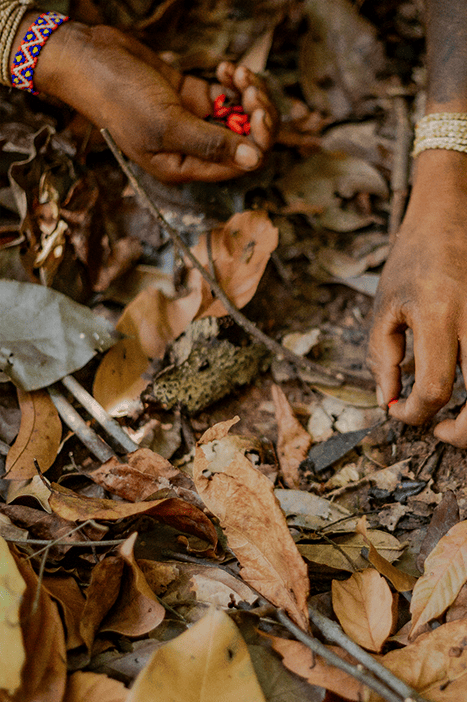
To propose a new
Seed Collector Group
To be part of the Xingu Seed Network, a Seed Collector Group must have a guaranteed seed collection area where the seeds used in our muvucas can be found. In addition, the collection region must be within our area of operation, that is, the Xingu, Araguaia, and Teles Pires river basins, in Mato Grosso, Brazil.
The first step, then, is to go through an evaluation by the Board of Directors and the Steering Committee, as well as the Advisory and Fiscal Councils. This is because the admission of a new Seed Collector Group requires a reorganization of the technical team of the Xingu Seed Network, which will need to dedicate itself to welcoming, guiding, and supporting the new collectors.
Thus, based on the Network’s technical capacity or that of a partner organization to support the new Group, as well as on market demand for seeds, we assess whether or not its entry is possible.