The Xingu Seed Network is the largest
reference in community-based
seed collection networks for ecological
restoration in Brazil
We are a non-governmental, non-profit association, structured
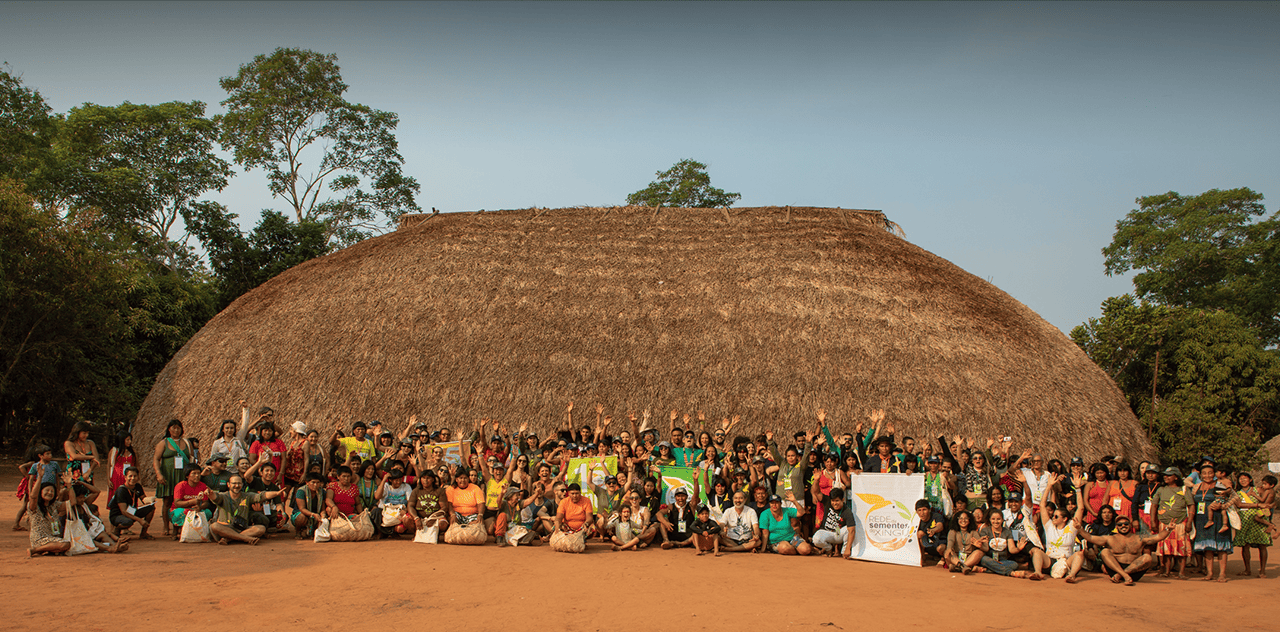
by Indigenous peoples, family farmers, and urban communities located
in the Xingu, Araguaia, and Teles Pires river basins, in Mato Grosso.
Altogether, we are made up of a technical team of 15 people
and more than 700 seed collectors.
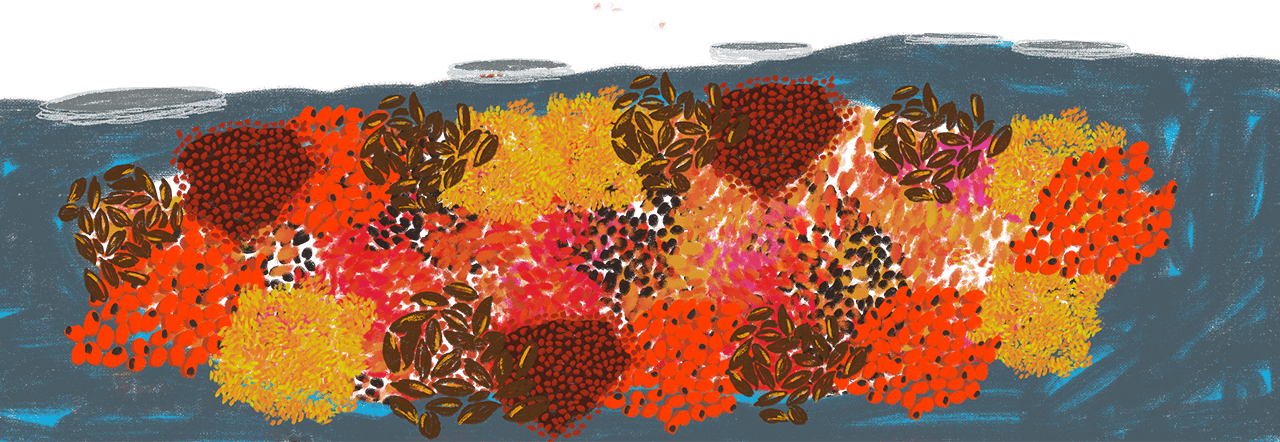
This “muvuca of people” is brought together
by two shared goals:
Ecological restoration through direct seeding with muvuca of seeds
Well Living of the peoples and territories that are part of the Xingu Seed Network

How does it work?
We work with the ecological restoration chain through direct seeding
with muvuca of seeds, from collection to planting.
Basically, we have three main activities:
Collection and commercialization of native seeds
>
Monitoring and support for Seed Collector Groups
>
Ecological restoration of seed collection territories
The flowchart below illustrates part of the path of
native seeds within the Xingu Seed Network:
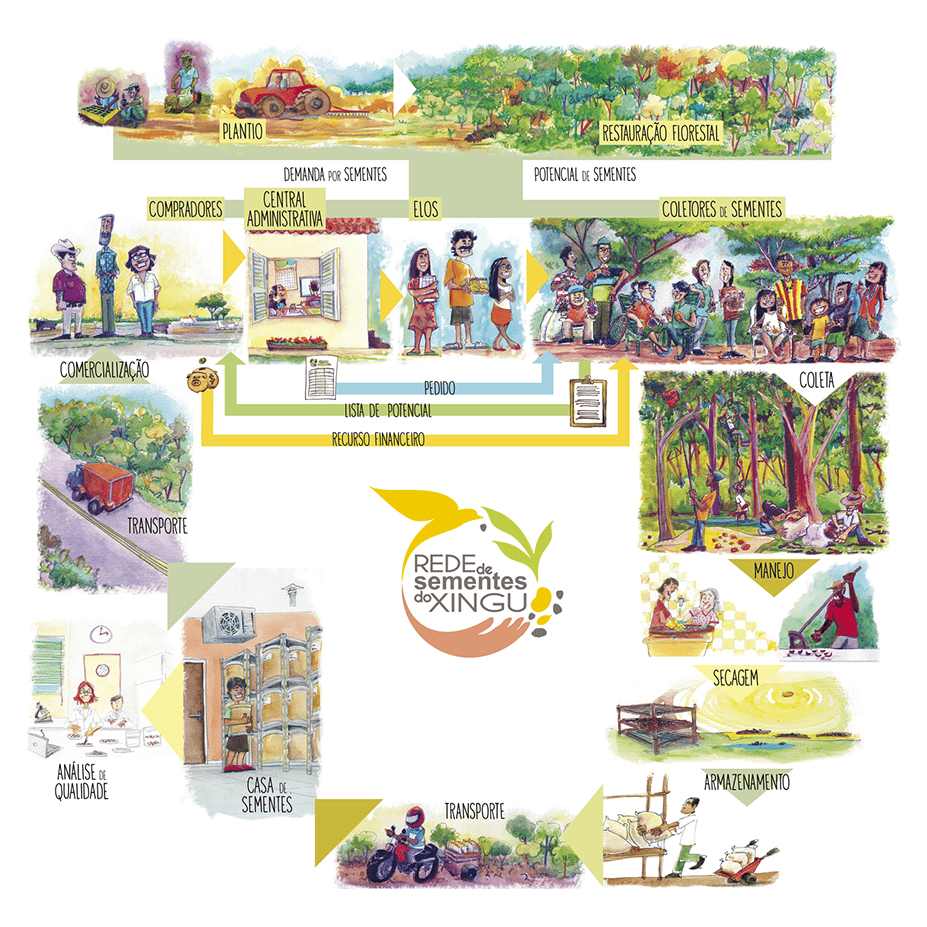
Our work cycle is annual and begins with the Seed Collector Groups preparing
the Collection Potential at the beginning of the year, while at the same time the Commercial Department seeks landowners and companies interested in restoring degraded areas.
By combining the Collection Potential with market demand, we generate the annual seed order for the Seed Collector Groups. In total, there are around two to three orders per year, always between the months of June and November.
Once analyzed and organized, the seeds are stored
in the Seed Houses, where we separate seed lots for analysis
of quality and behavior in the laboratory. Once analyzed and organized,
the seeds move on to their final destination: the land that will be sown.
Mission
The Xingu Seed Network’s mission is to care for the Well Living of all beings today, as well as future generations, ensuring that the Cerrado and the Amazon remain standing, protecting and restoring springs and river headwaters through ecological restoration with native seeds, as well as supporting initiatives of the Seed Collector Groups for the benefit of the lands they inhabit, contributing to the leadership of these peoples with autonomy, dignity, and socio-environmental and economic justice for the collectors.
Vision
Native forests restored, as well as water springs, river basins, and abundant life across different territories, and diversity established with dignity and socio-environmental justice, serving as an inspiration for popular ecological restoration in other biomes and regions of Brazil and the planet.
Our numbers
- 18 years of activity
- More than 700 collectors, organized into 24 Seed Collector Groups
- We work with three Indigenous territories – including six ethnic groups and more than 30 villages – as well as 15 family farming settlements and urban extractivist groups across 18 municipalities in Mato Grosso
- Approximately 415 tons of seeds from 220 species collected since 2007
- More than R$ 9.2 million transferred directly to collectors
- Nearly 11.5 thousand hectares restored with seeds supplied by the Network
"Y Ikatu Xingu":
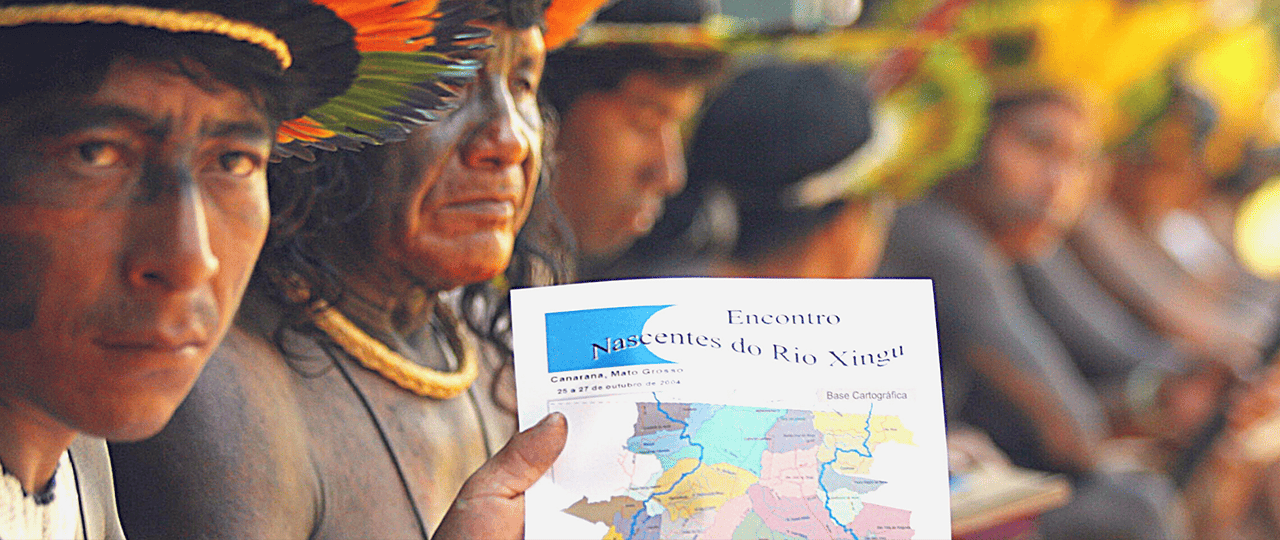
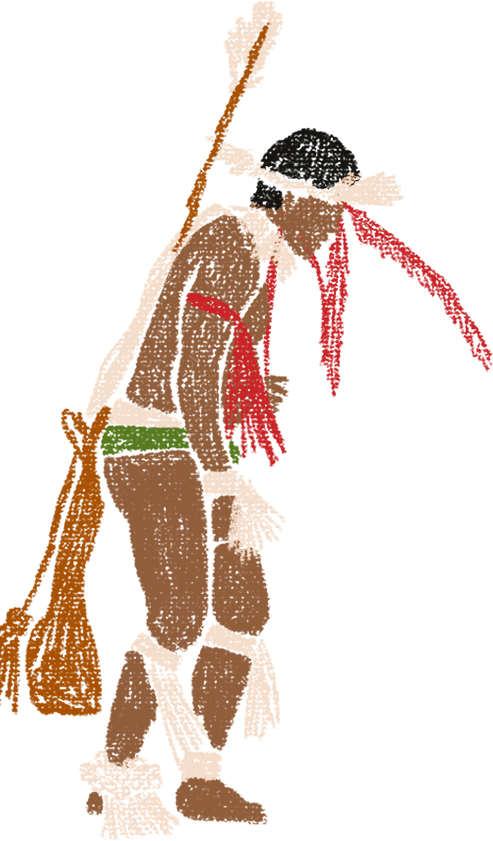
Founded in 2007, the year of the first delivery of native seeds collected by Indigenous peoples and family farmers from the northeast of Mato Grosso, the Xingu Seed Network is one of the greatest legacies of the ‘Y Ikatu Xingu (Save the Good Water of the Xingu, in the Kamayurá Indigenous language) campaign, led by the Socioenvironmental Institute (ISA).
The campaign achieved something unprecedented in the region at the time: bringing together different forces to restore native forests along springs and riverbanks in the Xingu River basin, planting native vegetation in an economical and efficient way, with the goal of restoring water quality and availability throughout the region.
In its launch year, the structure of the Xingu Seed Network consisted of five seed collector groups and two Seed Houses. The dissemination of this efficient and economical planting technique generated a concrete demand for native seeds for restoration. Thus, the Network emerged as a community-based system for the production of forest seeds.
With the addition of new groups and the growth of the initiative in its early years, in 2014, the Xingu Seed Network was formally established as a non-profit association, with the objective of generating autonomy in the processes of the restoration value chain in which the Network operates.
Since becoming an association, the Network has been able to commercialize seeds, register collectors with official bodies, apply for projects supporting its activities, and carry out financial transactions without relying on other organizations.

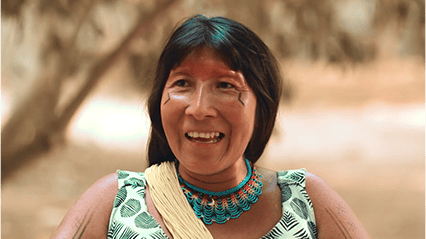

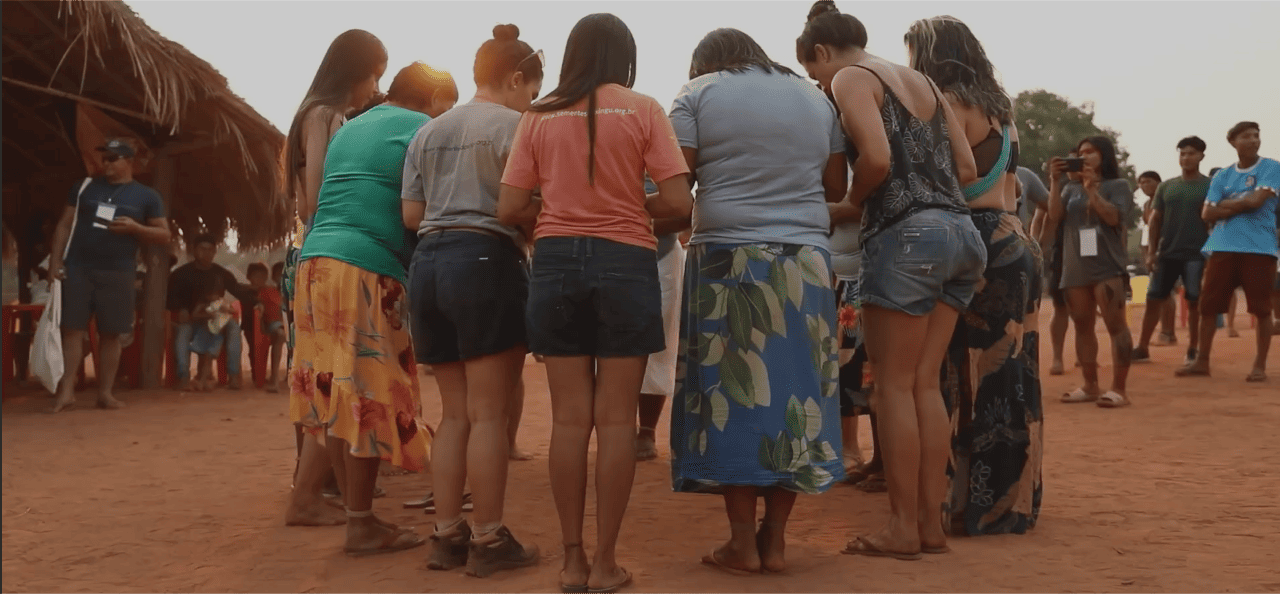
In 2026, the Network is made up of approximately 700 seed collectors, organized into 24 Seed Collector Groups, of which 12 are Indigenous, 9 are from family farming settlements, and 3 are mixed (groups with collectors from settlements and urban areas). Of this workforce, about 80% is made up of women.
Throughout this history, the Xingu Seed Network has already collected more than 220 different seed species, generating nearly R$ 9.2 million in income for the collecting community. Together, the Network’s groups have commercialized more than 415 tons of muvuca, capable of restoring around 11.5 thousand hectares of previously degraded areas — areas that are now forests!